

Introduction
To explore if a low carbohydrate diet is right for you, we first must understand what a carbohydrate is. We know excessive carbohydrate intake can lead to insulin resistance and metabolic syndrome. However, it is contingent on your body’s ability to utilize carbohydrates.
Genetics, activity level, the amount of daily carbohydrates in the diet, muscle mass, and your current metabolic health are pieces of the puzzle in helping to determine if a low carbohydrate diet is suitable for you.
What is a Carbohydrate?
A carbohydrate is considered a macronutrient, along with protein and fat. Carbohydrates are broken down into glucose (blood sugar) for the cells in our body to use for energy. When glucose is in the bloodstream, it is used immediately or stored in the muscle and liver for later use.
Macronutrients are the nutrients our bodies require in larger quantities to function properly. Let’s first compare the macronutrient calories per gram:
| Macronutrient | Calories/gram |
|---|---|
| Carbohydrate | 4 Cal/gm |
| Protein | 4 Cal/gm |
| Fat | 9 Cal/gm |
What are Three Types of Carbohydrates?
- Simple
- Starches
- Fiber
A simple carbohydrate consists of one or two glucose molecules. These simple molecules break down very quickly, enter the bloodstream, and rapidly raise blood sugar.
Examples of simple carbohydrates include monosaccharides (single sugar molecules) and disaccharides (two single sugar molecules) joined together.
| Monosaccharides |
|---|
| Glucose |
| Fructose |
| Galactose |
| Disaccharide | Unit 1 | Unit 2 |
|---|---|---|
| Sucrose (table sugar) | Glucose | Fructose |
| Lactose (milk sugar) | Galactose | Glucose |
| Maltose (malt sugar) | Glucose | Glucose |
Foods that Contain Glucose
- sugary and sweet drinks
- added sugar in processed foods
- grains, rice, bread, and pasta
- baked goods
- cured meats
- sauces
- fast foods
Foods that Contain Fructose
- All fruit: apples, dates, figs, pears, cherries, fruit juices, etc.
- Vegetables: beets, tomatoes, peas, onions, red peppers, carrots, potatoes, corn, etc.
- Agave and honey are about 60-90% fructose, comparable to high fructose corn syrup.
- Natural Sweeteners: maple syrup, agave, honey, and high fructose corn syrup.
*High fructose corn syrup has been linked to the incidence of Nonalcoholic Fatty Liver Disease (NAFLD).
Complex carbohydrates include starches and fiber. They are polysaccharides with many glucose units attached, so they take longer to break down. One significant difference between simple and complex carbohydrates is a slower and steadier release of energy, reducing the spike in blood glucose.
Glycemic Index vs Glycemic Load
The glycemic index (GI) assesses how fast carbohydrate-containing foods increase blood sugar levels. Based on their impact, foods are assigned a score from 0 to 100.
The glycemic load (GL), on the other hand, considers both the quality and quantity of carbohydrates in a food, offering a more precise assessment of how a food impacts blood sugar levels. It measures the amount of carbohydrates in a serving and presents it as a numerical value.
Here are some suggested resources where you can find information on GI:
- You can find detailed information about the nutrient content of over 8,000 foods in the USDA (United States Department of Agriculture) Food Composition Database. It is available for free online at https://fdc.nal.usda.gov/
- The Glycemic Index Foundation has a searchable database of over 1,000 foods and their glycemic index values. You can access it at https://www.gisymbol.com/food-search/.
- The American Diabetes Association lists low glycemic index foods on their website at https://www.diabetes.org/glycemic-index-and-diabetes.
What I consider to be more helpful are the “infographics” that Dr. Unwin, a Low Carb British physician, produced to demonstrate the equivalent number of teaspoons of sugar in typical portions of common foods. Each teaspoon would represent 4 grams of sugar. So, for example, one banana would be equivalent to 6 teaspoons of sugar, causing similar spikes in insulin. One serving size, 150 g (about 5.29 oz) or 3/4 cup of boiled white rice, is equivalent to 10 teaspoons of sugar. Use this link to see all of Dr. Unwin’s sugar infographics. https://phcuk.org/sugar/
What is Oxidative Priority?
Oxidative priority of food refers to the order in which different macronutrients (carbohydrates, proteins, and fats) are oxidized and utilized by the body for energy. We also need to consider alcohol and ketones. The priority order of oxidation to provide energy for the body is:
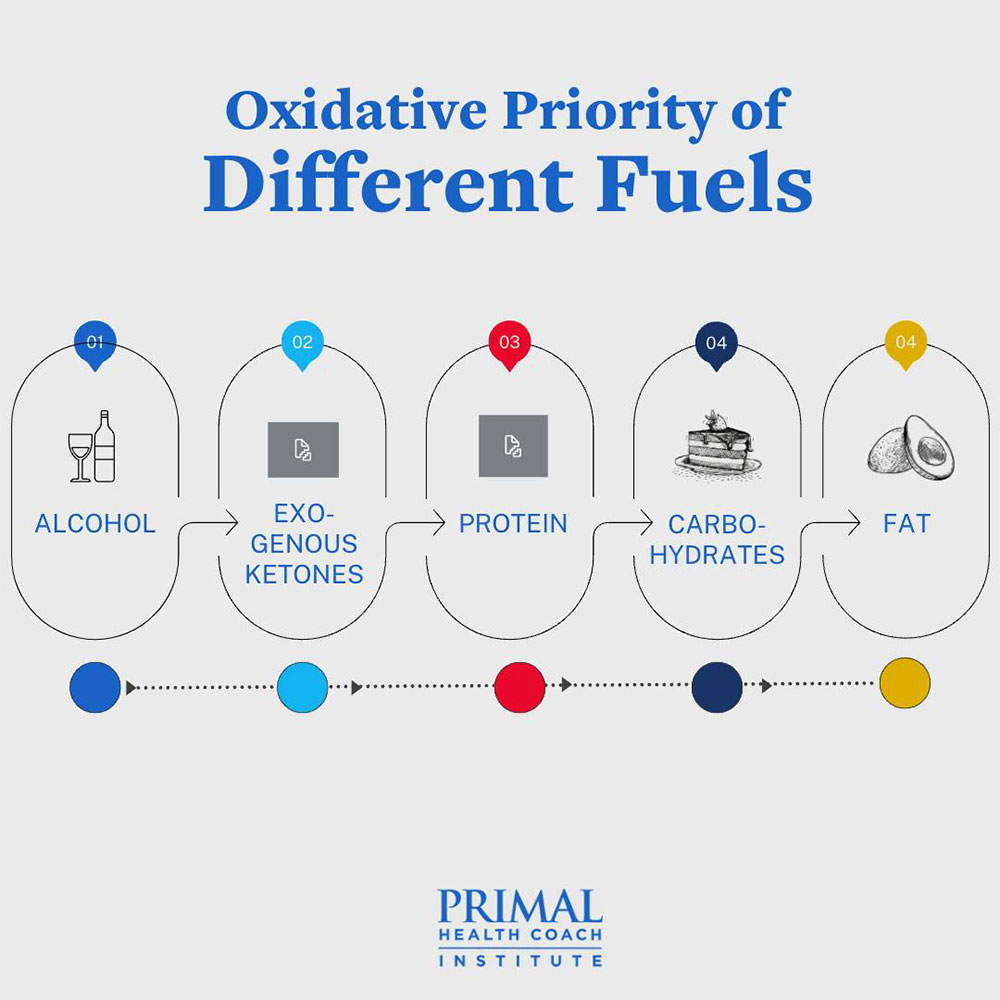
Oxidative Priority and its Connection to the Success of Low-Carb Diets
The Standard American Diet comprises 43-50% of carbohydrates. Approximately 70% of the Standard American Diet consists of highly processed foods, accounting for 63% of consumed calories. Processed foods are those found in the middle aisles of the grocery store, in a box or a wrapper. These foods have a laundry list of ingredients of inferior quality which tend to be inflammatory.
The metabolic by-product of alcohol is acetate which is toxic to the body. The human body cannot store alcohol, so that the liver will break down alcohol before any other fuel source. A night out for pizza and beer will lead to the storage of most of those carbs and fats.
Some individuals utilize exogenous ketones to increase their blood ketone levels. Ingesting exogenous ketones can be important for individuals who need to maintain a certain level to prevent seizures. However, consuming drinks to raise ketones in your blood can be counterproductive. Ketones cannot be stored. They either burned or excreted. So, by drinking ketones, you will need to burn those endogenous ketones before utilizing ketones produced from burning your stored fat.
The body prioritizes protein and metabolizes it before carbs and fats because it’s vital for maintaining good health. It is a crucial building block for our body and is used to repair and build tissues, muscles, and bones. Protein also creates enzymes, hormones, and other essential molecules necessary for various bodily functions.
The next in line is carbohydrates, and when in excess, it causes hyperinsulinemia, which signals the body to store fat. As we develop insulin resistance, the cells cannot access glucose for energy, so the pancreas produces more insulin to get the glucose into the cell. Have you ever eaten a big plate of pasta, and a half hour later, you are in the kitchen looking for something to eat? Hunger right after a meal with a large amount of carbohydrates is one of the signs you are insulin resistant. When in this state, you cannot burn fat for fuel.
If you limit the number of carbohydrates you ingest, insulin spikes and elevated insulin levels will be reduced or eliminated as you become metabolically healthy, thus preventing a sudden drop in blood sugar and the need to eat more carbs. That is why you get cravings. The beta cells in your pancreas that were over-producing insulin for years will heal.
The liver is an amazing organ, and it can regenerate and repair. Your body will use your stored fat as you use up the glucose in your liver and muscles. When the liver is healthy, the visceral fat disappears, your waistline shrinks, and you produce ketones. The best part about your body making its own ketones, it is FREE! No nasty-tasting drinks are required.
There is hope. Food is my medicine; it can be yours too.
If you want to learn more about managing your metabolic health and preventing chronic disease, consider subscribing to my website. You can also book a call to see if a health coach is suitable to navigate your metabolic health journey.

